
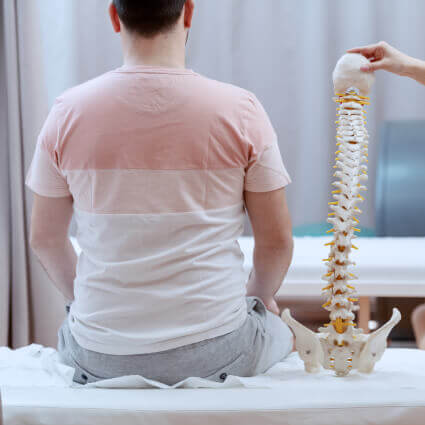
 When you have degenerative disc disease, the idea of a machine pulling on your spine can sound frightening. The most common question we hear is some version of: “If my discs are already worn down, won’t stretching them make it worse?”
It’s a fair question, and it deserves a direct answer rather than marketing reassurance. Here’s the honest picture.
First, what degenerative disc disease actually is
Despite the name, degenerative disc disease isn’t really a disease — it’s the gradual wear that happens to spinal discs over time. Discs lose water content, lose height, and become less effective shock absorbers. This can cause stiffness, chronic aching, and in some cases pressure on nearby nerves that produces radiating pain.
The “degenerative” part matters for treatment because a worn disc is dehydrated. And dehydration is one of the specific things decompression is designed to address.
Why decompression is generally safe — and often helpful — for degenerated discs
Adult spinal discs have no direct blood supply. They get nutrients and water through diffusion — fluid moving in and out as pressure on the disc changes through normal movement. As discs degenerate and as we sit more and move less, that exchange slows down, and the disc dries out further. It’s a downward cycle.
Non-surgical spinal decompression works with this mechanism rather than against it. By creating gentle negative pressure inside the disc, it does two things:
1. It draws fluid and nutrients back into the disc, supporting rehydration.
2. It reduces pressure on compressed nerves by creating space.
Critically, decompression is not the same as yanking on your spine. It uses controlled, cyclical traction — gentle cycles of stretch and release, not constant force. The session should feel relaxing, not painful. Patients routinely fall asleep on the table.
So the fear that decompression “pulls a worn disc apart” gets the mechanism backwards. Properly applied, it’s helping a dehydrated disc do the one thing it has trouble doing on its own: take in fluid.
Where the safety conversation gets real
Being straight with you means saying that decompression is not appropriate for everyone. It’s contraindicated or requires caution in cases such as:
- Spinal fractures or significant instability
- Certain surgical hardware in the spine
- Severe osteoporosis
- Tumors or infections affecting the spine
- Pregnancy (in most protocols)
- Progressive neurological deficits that signal a surgical emergency
This is exactly why a real evaluation matters. A responsible clinic reviews your history and your imaging before putting you on a table — not to upsell you, but to confirm you’re a safe candidate and to rule out the situations where decompression isn’t the right tool.
If you’re not a candidate, you deserve to be told that plainly. We’d rather tell you the truth and send you to the right specialist than treat someone we can’t actually help.
What the evidence says about effectiveness
Safety and effectiveness are different questions, and degenerative disc disease patients reasonably want both answered. Dr. JD Dudum co-authored research published in The Journal of Contemporary Chiropractic documenting MRI-confirmed reduction in lumbar disc herniation size following non-surgical spinal decompression. MRI confirmation is the standard that matters — it shows a structural change, not just a patient reporting they feel better.
For degenerative cases specifically, the realistic goal is often pain relief, improved function, and rehydration that slows or interrupts the degenerative cycle — getting you back to living without leaning on medication, injections, or surgery.
The bottom line
For most people with degenerative disc disease, properly performed non-surgical spinal decompression is safe, gentle, and aligned with how discs actually heal. The risks come almost entirely from applying it to the wrong candidate — which is preventable with a proper evaluation.
If you have degenerative disc disease and you’re wondering whether decompression is right and safe for you specifically, the answer comes from looking at your imaging and your history, not a blog post. Bring your MRI in and we’ll give you a straight answer about whether this is something that can help you.